
With a buyer selected, the next step is choosing what they're buying — seats on a reserved-seating map, or a quantity on a general-admission event.
Reserved seating
Click a seat on the map to select it; click it again to deselect it. Seats are colored by pricing tier. Seats you select are labeled Your Hold; a seat already sold or otherwise unavailable is plain grey, regardless of tier. If the layout has a wheelchair-accessible seat, an Accessible entry appears in the legend.
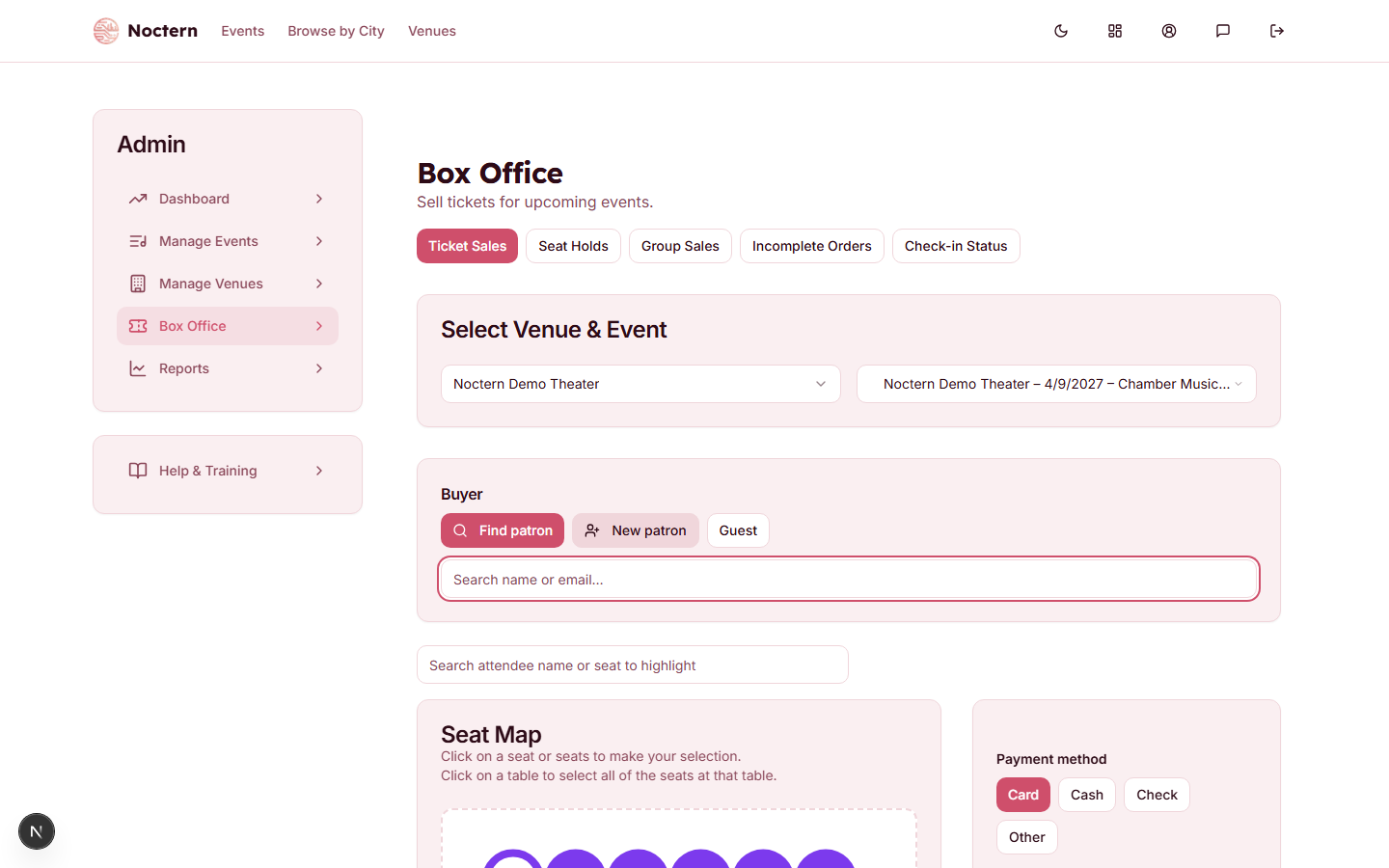
Reserved-seating box office seat map with a held group block visible Selected seats appear in a Selected Tickets box with the price of each, and the order summary below shows a running total. The total shown is always server-computed — it isn't just adding up client-side numbers.
Price categories (Adult / Senior / Student…)
If the performance has pricing categories, each selected seat gets its own row of radio buttons under its label — the same options and prices an online buyer sees for that seat's tier, with the price next to each.
- The default is full price (the highest-priced category that applies), so leaving them alone charges exactly what you'd charge without categories. A hint below the box says so: "Price category defaults to full price — change it per seat if the patron qualifies."
- Change it per seat — one patron can buy an Adult and a Senior in the same order.
- Seats on a tier with no categories just show the plain line, no radio buttons.
- The box office ignores a category's sale window, so a category shows here even when it has closed online.
Price categories apply to reserved seats only. A general-admission quantity is priced by its tier and can't be re-priced by category — use a promo code there instead.
Seats another session is holding look the same as sold seats — plain grey — and can't be clicked. Hover over a grey seat that's part of a group-sale block to see the group name (for example, Held — Lincoln Elementary (Group)).
Held seats you select yourself have a longer hold window than a public patron's cart hold — you don't need to rush through checkout the way a customer buying online does. Still, don't leave seats sitting selected indefinitely; release them if the sale falls through.
General admission
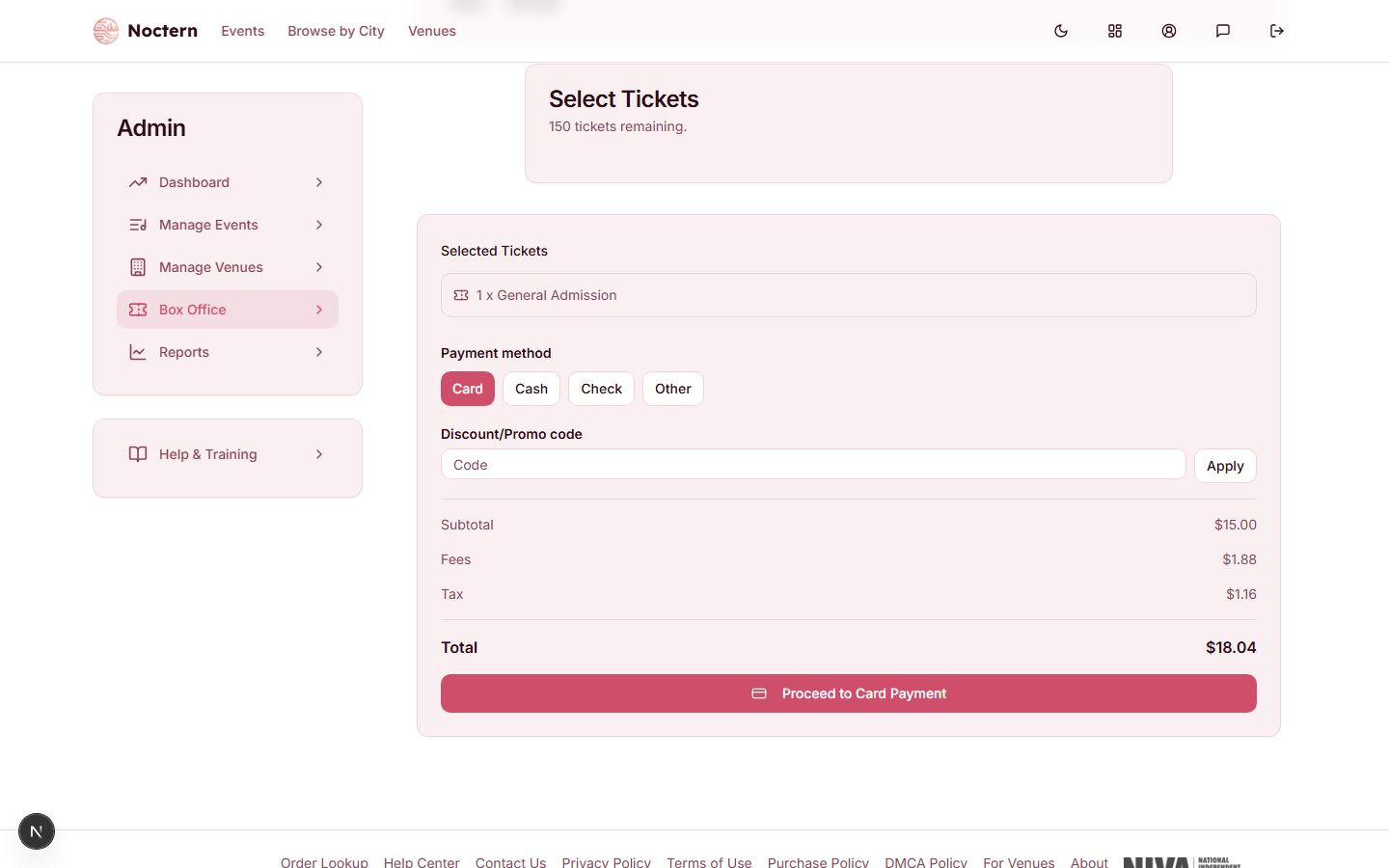
GA events use a Select Tickets card with a quantity stepper (+ / −) per pricing tier, each tier showing its name and price. Adjust the quantity, and the order summary updates the same way it does for reserved seating.
The "tickets remaining" line under the card heading is the whole performance's remaining capacity — not a per-tier figure. The + buttons stop once the tickets you've selected reach it.
Price categories don't apply to a GA quantity. If a GA patron needs a discounted rate, use a promo code instead (see the next topic).