
The Advanced audience mode lets you combine multiple rules with AND/OR logic, and add an exclude list that removes patrons even if they match the include rules. You can save the definition as a named audience and reuse it across future campaigns and automations.
Building a compound audience
Switch to the Advanced tab in the campaign composer, then click Add rule.
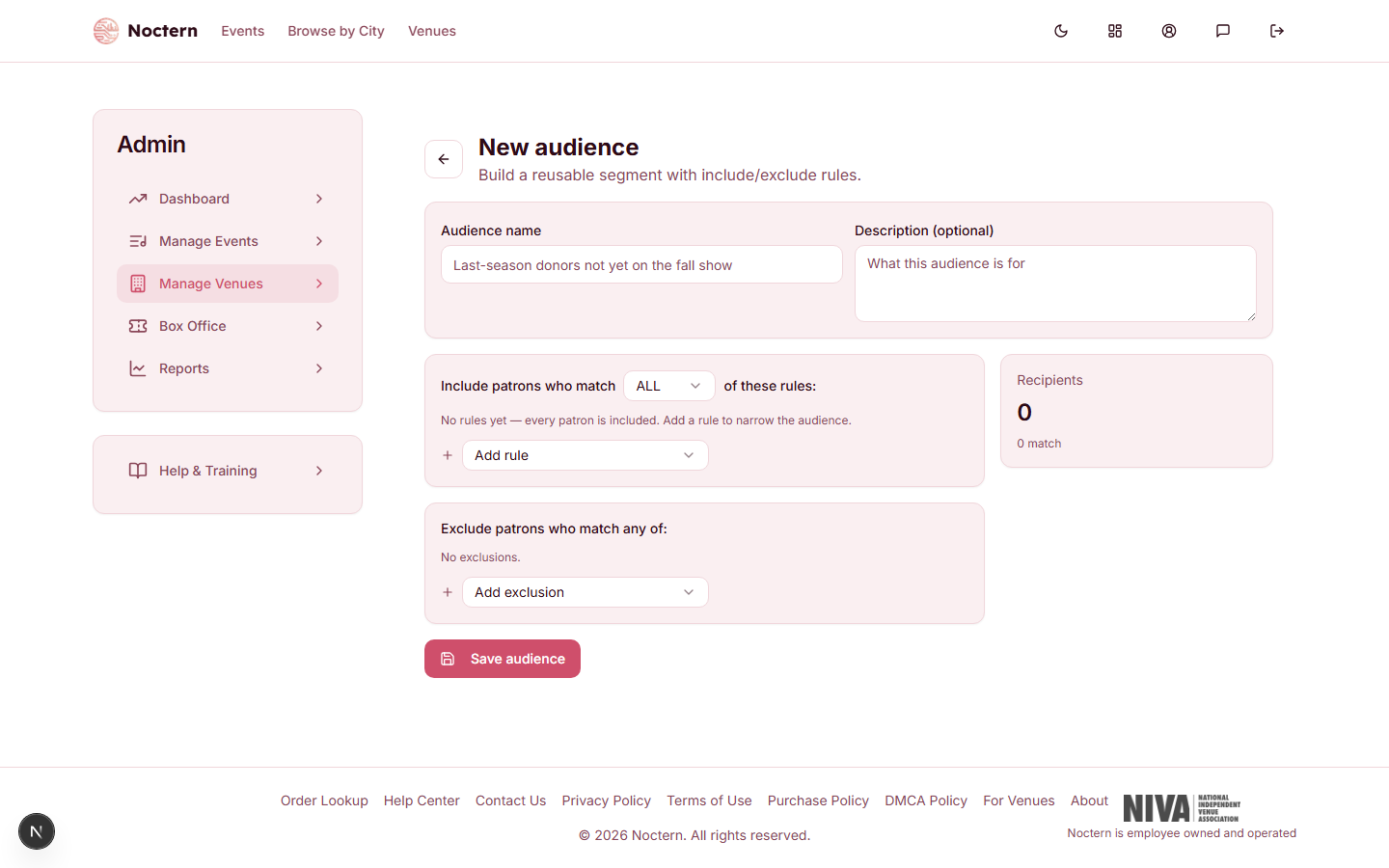
Each rule has a type and optional parameters:
| Rule type | What it does | |---|---| | All patrons | Includes everyone with a valid email | | Donors | Patrons with lifetime giving above an optional minimum | | Ticket buyers | Patrons with ticket spend above an optional minimum | | Lapsed donors | LYBUNT — gave before, not this year | | Recurring donors | Active sustainers | | Buyers of an event | Purchased tickets to a specific occurrence or series | | Bought in range | Purchased tickets in a date range — counts imported historical orders too | | By tag | Has a specific patron tag | | By location | State, city, or zip prefix | | By custom field | Custom field matches a value you specify | | One household | Members of a specific household |
Match-all vs. match-any
- Match all (AND) — the patron must satisfy every include rule
- Match any (OR) — the patron must satisfy at least one include rule
Exclude rules
Click Add exclude rule to specify patrons to remove from the audience even if they match all include rules. Any patron matching any exclude rule is removed.
A common use: include "All ticket buyers" but exclude "Buyers of [tonight's show]" — so you reach the broader list without bothering people already attending.
Live recipient count
As you add rules, a live Recipient count updates below the builder along with a 10-row sample of matching patrons. This count reflects the current patron database; the actual send-time list is re-evaluated when you click Send now, so the final count may differ if patrons buy tickets between preview and send.
The current send cap is 5,000 recipients per campaign. If your audience exceeds this, narrow the rules or split into multiple sends.
Saving an audience
Click Save as audience to name and store the current compound definition. Saved audiences appear in the Saved audience tab in the composer so you can select them without rebuilding rules from scratch.
Managing saved audiences
Go to Admin → Venues → [your venue] → Audiences to see all saved audiences.
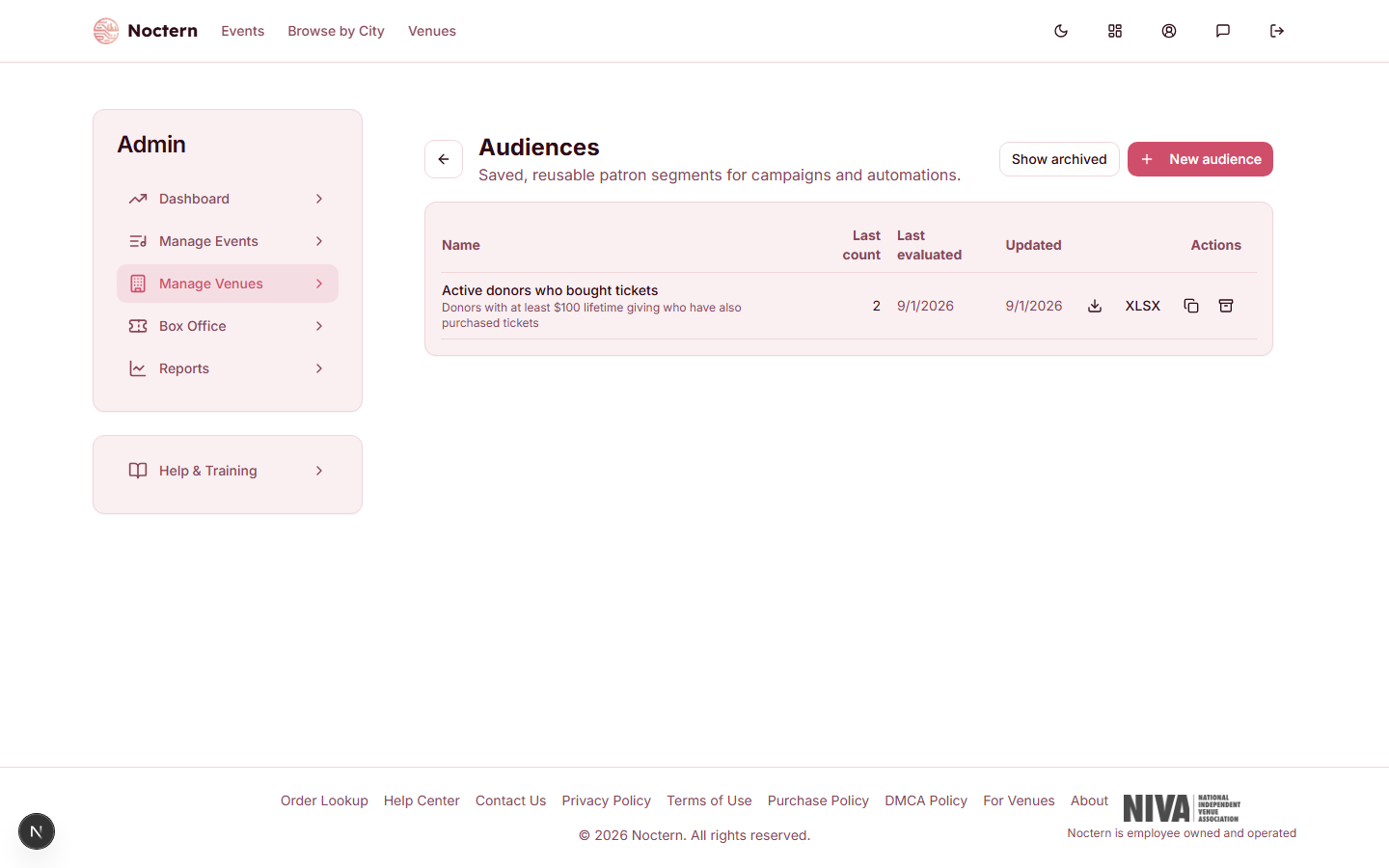
From the list you can:
- See the last evaluated Count and when it was calculated
- See how many campaigns currently reference the audience
- Export the current matching patron list as CSV or XLSX — the export includes all matching patrons (not only emailable ones) with an
emailableboolean column
The "Bought in range" rule counts imported historical ticket orders, making it a useful proxy for season-based segmentation even before your data was in Noctern. Note that "Attended category" rules cannot use historical orders.
Build a compound audience: include "Ticket buyers" AND exclude "Donors." Preview the count. Save it as "Non-donor ticket buyers." Open it in the Audiences list and export to CSV.